
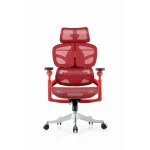
 Ergonomic Chairs
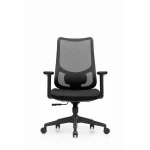 Office Chairs
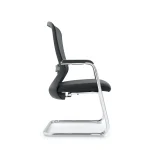 Visitor Chairs
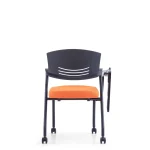 Training Chairs
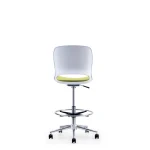 Leisure Chairs
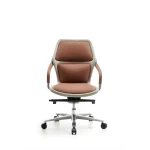 Leather Chairs
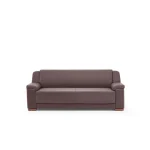 Office Sofas
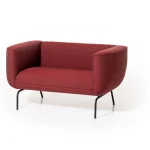 Leisure Sofas
 Office Table
Step 1: Define Your Core Needs (Ask Yourself a Few Questions)
Budget Range: Prices range widely, from budget chairs costing a few USD to high-end ergonomic chairs costing thousand of USD. Determining your budget will quickly narrow down your choices.
Usage Duration: Do you sit for less than 4 hours, around 8 hours a day, or frequently work overtime? The longer the usage time, the higher the requirements for the chair’s support and breathability.
Main Purpose: Is it for focused typing or flexible work requiring frequent turning and movement?
User Height and Weight: This is key to choosing the right chair size and support. A chair designed for tall people may not be suitable for shorter individuals.
Existing Discomfort: Do you have specific problems such as lower back pain, neck and shoulder pain, etc.? This determines the adjustment functions you need to focus on.
Step 2: Focus on Key Comfort and Health Elements
A good chair should act like a custom-made “exoskeleton,” dynamically supporting you.
Lumbar support (most crucial): A good lumbar support should be adjustable up and down, and forward and backward, precisely conforming to the natural curve of your lumbar spine (lumbar lordosis) to provide strong support and prevent your lower back from being unsupported.
Backrest Design and Materials:
One-piece backrest: Provides uniform support.
Sectional support backrest (e.g., lumbar, back, and shoulder sections): Better conforms to the curve.
Mesh material: Breathable and elastic, suitable for those who are sensitive to heat and for prolonged use, but the support may feel a bit firm.
Sponge material: Offers a good sense of envelopment and softness, but breathability is slightly lower.
Seat cushion:
Depth and width: When seated, the buttocks should be fully supported, with approximately 2-3 fingers of space between the back of the knees and the edge of the seat cushion.
Front-end design: Ideally, it should have a “waterfall-like” front edge to reduce pressure on the back of the thighs and promote blood circulation.
Materials: High-density foam is less prone to sagging, and mesh seat cushions are more breathable.
Headrest (Not essential but very practical): If you have a habit of taking a nap or often lean back to think, an adjustable headrest can effectively relax your neck and shoulders.
Armrests: They should at least be adjustable up and down to support your elbows when your arms are hanging naturally. Even better are those that can be adjusted forward and backward, left and right, and even width.
Adjustability: This is the soul of an ergonomic chair! Seat height, backrest tilt angle (preferably with a locking function), and seat depth (forward and backward adjustment) are the three basic and essential adjustment functions.
Step 3: Mainstream Brands and Types Reference
Entry-level value (USD100-300): Domestic brands such as Sihoo, UE and Lifease offer basic ergonomic functions and are good choices for beginners.
Mid-to-high-end mainstream (USD300-USD500 : This is the most competitive segment. Brands such as Comfort (Jinhao/Jinzhuo series), Ergomax, and Youpu perform well in terms of materials, adjustment functions, and workmanship, and can meet the more advanced needs of most people.
International high-end (above USD500 ): Brands such as Herman Miller (representative models Aeron and Embody), Haworth (Fern/Zody), and Okamura (Contessa/Sylphy) are known for their classic design, top-quality materials, exceptional durability, and superior ergonomics. They are typically the choice of professional design studios or corporations. If your budget allows and you’re looking for a high-quality chair, consider these options.
Last but most important advice: Try it out yourself!
Just like trying on shoes, no matter how perfect the specifications are, nothing beats sitting in it for 10 minutes.
Visit physical stores: Many furniture retailers and brand experience stores have samples.
Pay attention to e-commerce return policies: Many brands offer 30-day no-questions-asked returns, providing valuable “at-home trial” opportunities.
Additional reminder: No chair is suitable for sitting for 24 hours straight. Even the best chair requires good posture (back against the backrest) and regular movement (every 45-60 minutes).