 Ergonomic Chairs
 Office Chairs
 Visitor Chairs
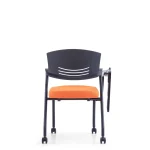 Training Chairs
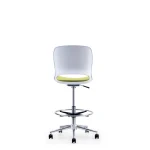 Leisure Chairs
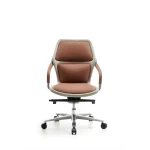 Leather Chairs
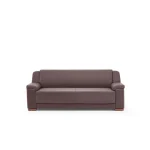 Office Sofas
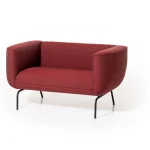 Leisure Sofas
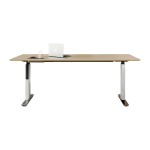 Office Table
- Whether the lumbar support “moves with you” is the crucial dividing line
80% of chairs on the market feature a “fixed protrusion” for lumbar support. It presses against you when you sit upright, but “betrays” you the moment you move.
A truly effective lumbar support must possess at least one of the following capabilities:
Vertical adjustability (at least 5cm range) to align with the natural curve of your lumbar spine
Depth adjustability (extending outward or retracting) to accommodate different body types
Dynamic lumbar tracking (the support moves in sync with the backrest tilt), ensuring your lower back remains supported whether you are sitting upright or leaning back
In short: the chair should adapt to your sitting posture, not the other way around.
- Seat depth matters more than seat softness
Many people assume that a softer seat is better. They are completely mistaken.
If a seat is too soft, your buttocks sink in, and the front edge presses against the backs of your thighs, restricting blood circulation. Prolonged sitting leads to numb legs and sore buttocks—not because the seat is hard, but because the support surface is incorrect.
The correct approach is to use an adjustable seat depth. Adjust it so that when you sit all the way back, there is a gap of two to three fingers’ width between the front edge of the seat and the back of your knees (the popliteal fossa). This supports your thighs without putting pressure on your knees.
If the seat depth isn’t adjustable, choose a model with a downward-curving front edge—a detail 90% of people overlook.
- Armrests aren’t just for show; they manage the weight of your entire arm
Many people focus only on the backrest and seat when choosing a chair, paying little attention to the armrests.
But consider the math: when typing, the combined weight of your arms is 8 to 12 kilograms. If the armrests aren’t adjusted to the right height and angle, that entire weight presses down on your shoulders.
Over time, this leads to trapezius tension, compensatory strain on the cervical spine, and migraines—issues that might stem not from the neck itself, but from improperly adjusted armrests. A good armrest should at least offer:
Adjustable height (allowing your elbows to rest naturally at a 90-degree angle)
Adjustable depth (providing support when your elbows extend forward for typing)
If your budget allows, opt for synchronized armrests—these tilt along with the backrest when you recline, ensuring your arms remain supported rather than left hanging in mid-air.
- Safety certification for the gas lift is the absolute bottom line.
I won’t mince words here: never buy a chair that lacks safety certification for its gas lift.
If a gas lift ruptures, the metal tube can drive straight through the seat and into the abdomen; this is not alarmist—such accidents are reported domestically every year.
Look for at least one of the following certifications:
SGS Class 4 (Class 4 safety certification)
BIFMA (Business and Institutional Furniture Manufacturers Association certification)
TÜV (Technischer Überwachungsverein / German Technical Inspection Association certification)
Additionally, the explosion-proof steel plate should be at least 2mm thick. If the product page for a chair doesn’t even list the brand and class of the gas lift—skip it immediately, without hesitation.
If the chair you are currently sitting in makes you uncomfortable, don’t just put up with it. Your lower back won’t stop hurting simply because you’ve “gotten used to it”; instead, it will silently undergo degeneration and wear, eventually developing bone spurs. By the time you notice the damage, simply swapping out the chair won’t be enough to fix it.
However, I also advise against blindly rushing to buy the most expensive option. A high price tag doesn’t guarantee the right fit—suitability is what matters.
Go to a physical store to try the chairs out, or choose an online retailer that offers a free trial period. Adjust the chair to your most comfortable setting, sit in it for twenty minutes, stand up and walk around a bit, then sit back down. Repeat this process three times, and your body will give you the answer.
Your body is more honest than any marketing copy.