
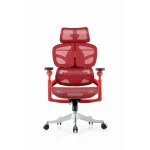
 Ergonomic Chairs
 Office Chairs
 Visitor Chairs
 Training Chairs
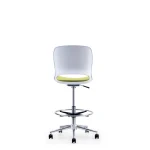 Leisure Chairs
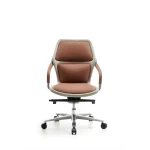 Leather Chairs
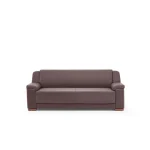 Office Sofas
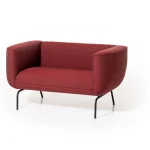 Leisure Sofas
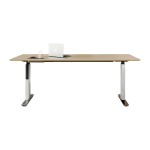 Office Table
Do you experience this too?
At 3 PM, a feeling of emptiness in your lower back leads you to unconsciously slump into a “shrimp” position.
Your shoulders feel like they’re carrying invisible bricks, getting heavier and heavier.
Your wrists feel numb as you type with them suspended in the air.
There are many adjustment mechanisms on the chair, but no matter how you adjust it, it’s always “just not quite right.”
This isn’t your problem; it’s that most chairs only “imitate ergonomics,” rather than truly “fitting your dynamic body.”
🪑 The core secret of a good chair: not support, but “dynamic following”
Ordinary office chairs provide passive support—they don’t move when you’re still.
A true ergonomic chair, however, should be like a perfectly matched dance partner, actively supporting the curve of your spine whether you’re leaning forward to write, leaning back to think, or turning sideways to retrieve documents.
Our solutions:
✅ 3D Suspended Lumbar Support | Not a fixed, rigid top, but like a palm supporting your lumbar spine, adapting 5cm up and down to match your posture changes.
✅ Synchronized Gliding Backrest | When leaning back, the lumbar support and backrest move forward in tandem, ensuring the support point is not lost (say goodbye to your lower back being unsupported when leaning back!)
✅ Deep-Sea foam Seat Cushion | 7cm high-density sponge with a waterfall edge distributes pressure on your hips, preventing leg numbness even after prolonged sitting.
⚙️ The devil is in the details: Designs you’ll never want to go back from once you’ve used them
45° Atlantoaxial Support in the Headrest
More than just elevating the neck, it precisely supports the cervical junction (C1-C2 vertebrae)
It locks in place with a slight backward tilt during lunch breaks, achieving a “zero-pressure nap for the cervical spine”
6D Adjustment Secrets for the Armrests
8cm Up/Down | Adapts to different desk heights
30° Left/Right Rotation | Perfectly supports the forearm angle when typing
6cm Forward/Backward Sliding | Provides a stable fulcrum for the body
The Tension Philosophy of the Mesh Fabric
Using German technology to weave the mesh, it’s both soft horizontally and resilient vertically
It won’t sag when you sit down, and it rebounds instantly when you stand up (deformation rate <3% in 5 years of testing)
📊 Comparative Experiment: When Body Data Speaks for Itself
We invited 10 programmers to participate in an 8-hour real-world test:
Using a regular chair: Peak lumbar spine pressure reached 220% of body weight
Using this ergonomic chair: Pressure remained stable between 110-130% of body weight
(Data source: Spine Biomechanics Laboratory Pressure Sensor Test)
One user commented: “Before, I felt like I’d been beaten up after get off work; now I can finally bring my energy home to my family.”
🎯 Self-Assessment Checklist for Suitable Candidates
If you meet two or more of the following criteria, this chair might be your “workplace savior”:
Daily desk work > 6 hours
Have a history of lower back strain/cervical discomfort
Habitually use various sitting postures (upright, leaning forward, reclining)
Looking forward to “one chair for multiple uses” (office, gaming, reading)
Investing in health > medical expenses
💡 One last tip: The chair is just a “supporting role.”
Even the best chair needs the following:
Get up and pour water every 45 minutes (the simplest form of exercise).
Keep the top of the screen at eye level (avoid looking down).
Keep both feet flat on the ground (adjustable with foot pedals).
We don’t believe in a “perfect” ergonomic chair, but we do believe that a chair truly designed for your dynamics can make you forget the chair exists—that’s the best state.